Steel Stair Detailing
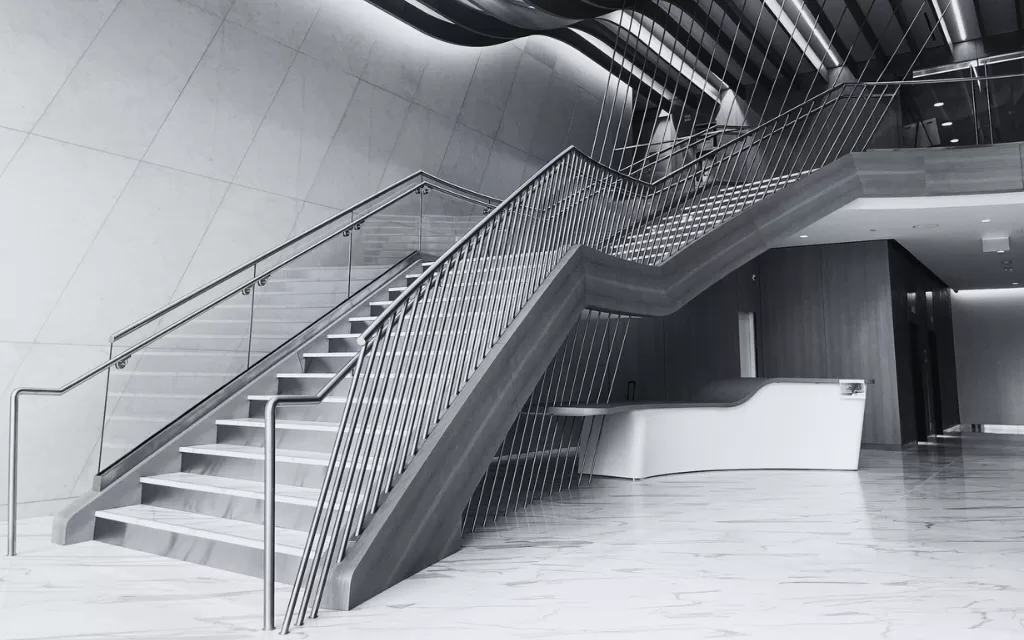
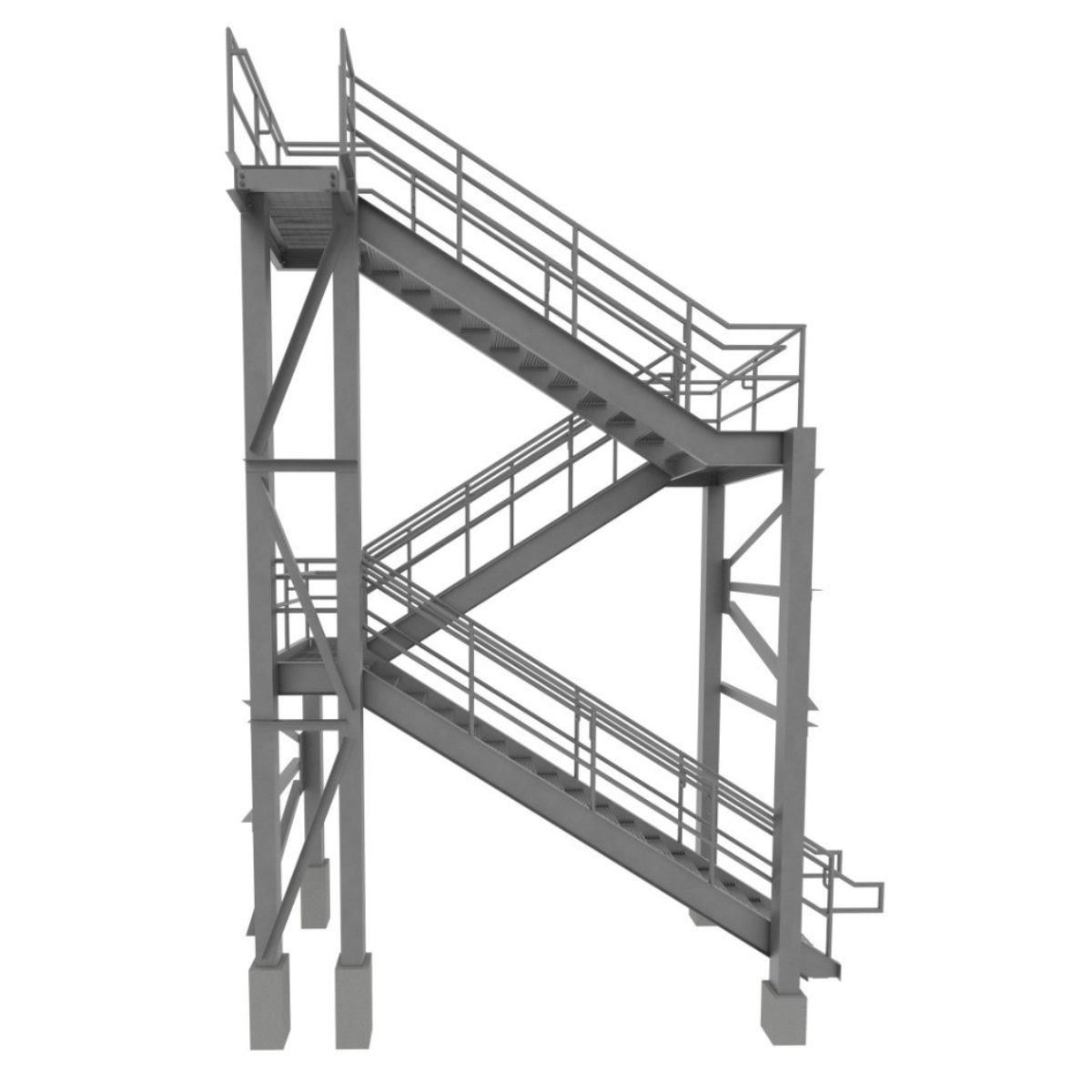
Stairs are part of nearly every other project we work on and many of our projects are stair-focused from the start. Our team details back-of-house stairs, industrial access stairs, and feature stairs with custom railings, glass, and visible finish requirements.
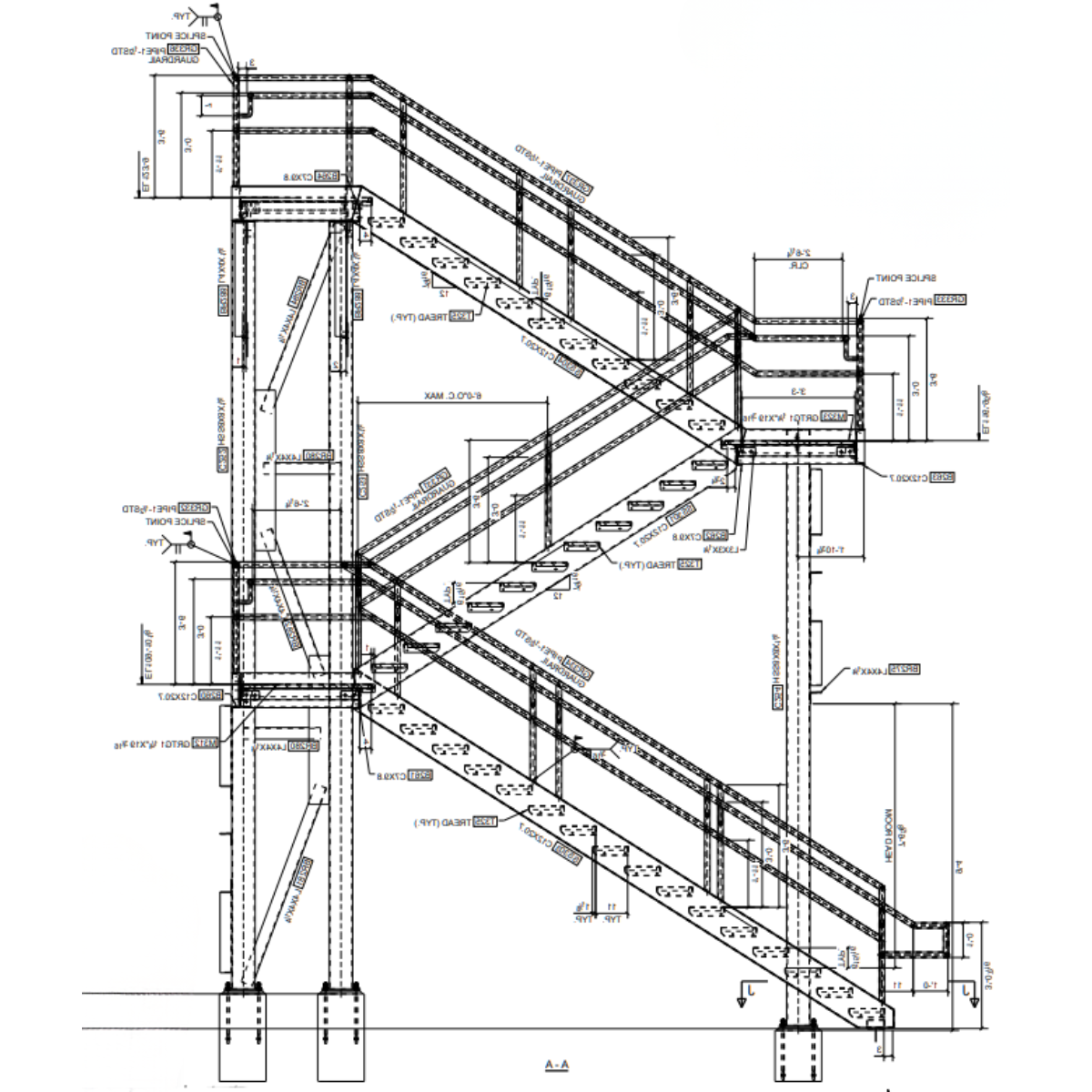
We prepare coordinated stair, landing, and railing models and drawings for fabrication and field use. Scope can include stringers, stair framing, landings, pans, treads, guardrails, handrails, glass rails, support steel, and related connections.
500+
projects
done
12
years on US market
26
in-house detailers
100%
double‑checked drawings
Before We Start Detailing Your Stairs
Good steel stair detailing comes down to geometry, connections, and fit. Stairs need to work with the surrounding steel, concrete, openings, and finishes, not just work on paper.
Before modeling begins, we review the information that controls the stair package and identify items that require confirmation.
- Stair and landing extents included in the detailing scope
- Applicable architectural and structural drawings and specs
- Available field dimensions, surveys, point clouds, or existing-condition information
- Floor elevations, openings, slab edges, and support locations
- Conflicts between architectural and structural elevations, dimensions, and opening sizes
- Architectural exposure and finish requirements where applicable
- Tread, riser, nosing, pan, grating, and finish build-up requirements
- Guardrail and handrail extents, heights, returns, terminations, and infill requirements
- Required approval, fabrication, and erection deliverables
- Shop and field connection preferences that may affect access, welding, bolting, or erection
- Fabricator preferences for materials, shop welds, field connections, shipping limits and etc.
What Gets Resolved Before Steel Reaches Your Shop
Shop and Field Information
- Piece marks and assembly breakdowns
- Weld and bolt information based on the approved design and calcs
- Field splice locations and approved splice details
Guardrails & Handrails
- Guardrail and handrail design and size
- Extensions and termination conditions
- Bracket design, spacing, and attachment details
Layout and Supports
- Plan dimensions, floor-to-floor elevations and landing levels
- Stair runs, riser count, tread layout, and required clearances
- Conditions where the stair connects to structural steel or concrete
Your team gets a stair package that is clear, coordinated, and ready for fabrication.
Our Steel Stair Detailing
Services
- Stair Framing & Connections
We model stair framing and connection using the design documents and calculations provided by the PE. Stringers, landings, supports, connections, and later design changes/revisions with the fabricator and their PE. So the model, drawings, calcs and engineering information remain aligned.
- Railings, Handrails & Guardrail Infills
We detail handrails, guardrails, railing panels, glass infill panels, terminations and extensions, and support details so every railing element ties back clearly to the stair frame and landings.
- Coordination & Existing Conditions
We coordinate stair models with structural steel, concrete, finishes, and other trades, and adjust them for retrofit work, existing structures, and field-measured dimensions.
- Revisions & Fabrication Support
We incorporate revisions in a controlled way and keep the stair package updated to support fabrication, installation, and follow-up questions.
BIM-Ready Digital Package
Tailored Deliverables for your Shop

From detailed BIM models to DXF, STP, and shop drawings — we deliver steel stair sets built to U.S. fabrication standards and checked for accuracy, alignment with field conditions, and smooth integration with your workflow.
Shop Drawings
PDF and DWG
Erection Drawings
PDF and DWG
Model
IFC, DWG (other formats available)
NC Files
DSTV NC1 for all pieces
DXF Files
For plates with tooling layers
Material List
PDF and Excel
Assembly List
PDF and Excel
STP Files
For 3D exchange and fabrication
MIS / KSS Files
For MIS software
Bolt List
PDF and Excel
Sample files From Actual Projects
Real drawing examples show the package faster than any description. Below are the types of shop drawings we commonly prepare for fabrication use, including beams, columns, stair stringers, railings, and other assemblies. Each example shows how marks, dimensions, materials, welds, bolts, bills, and details are organized on actual project sheets.
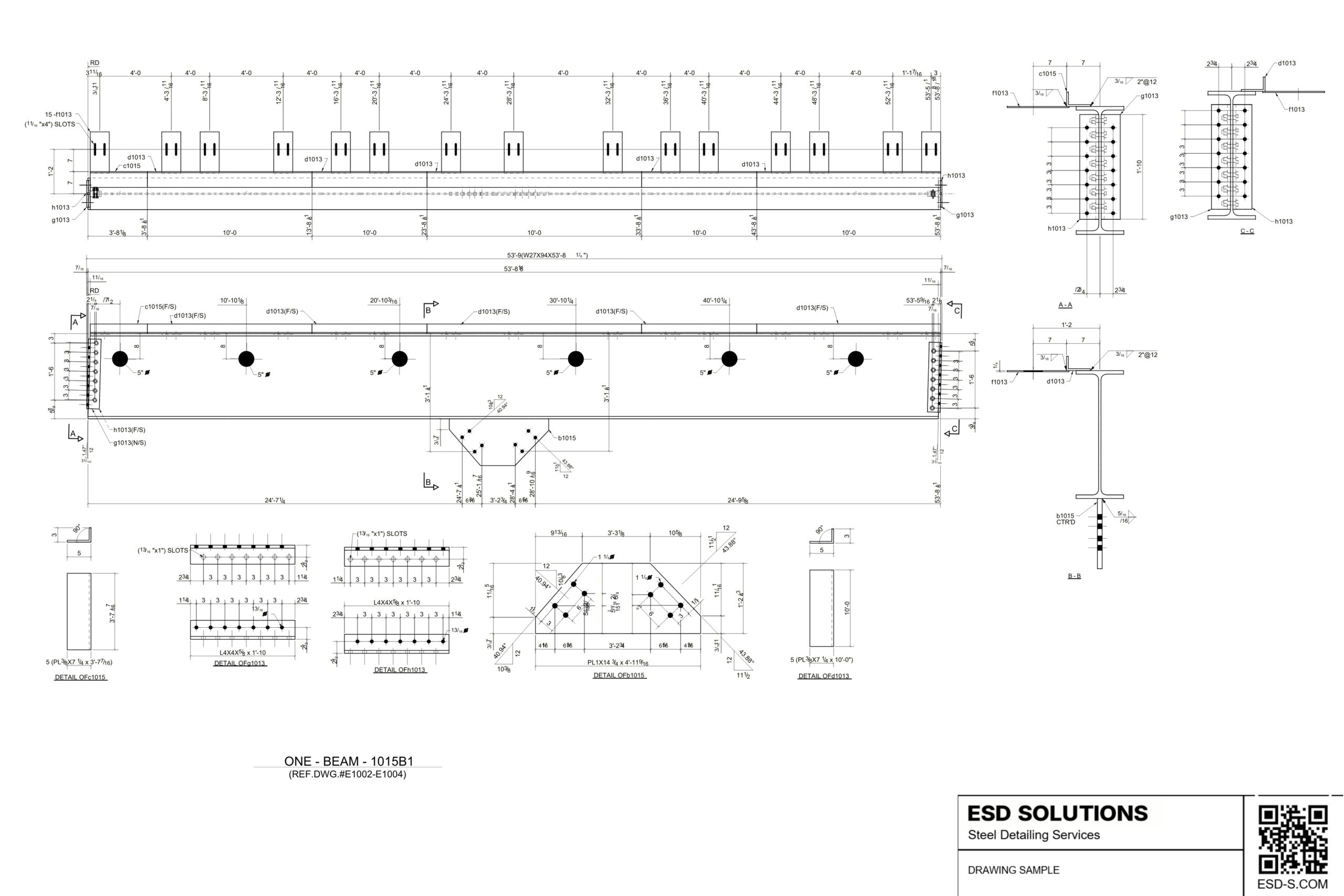
Shop Drawing
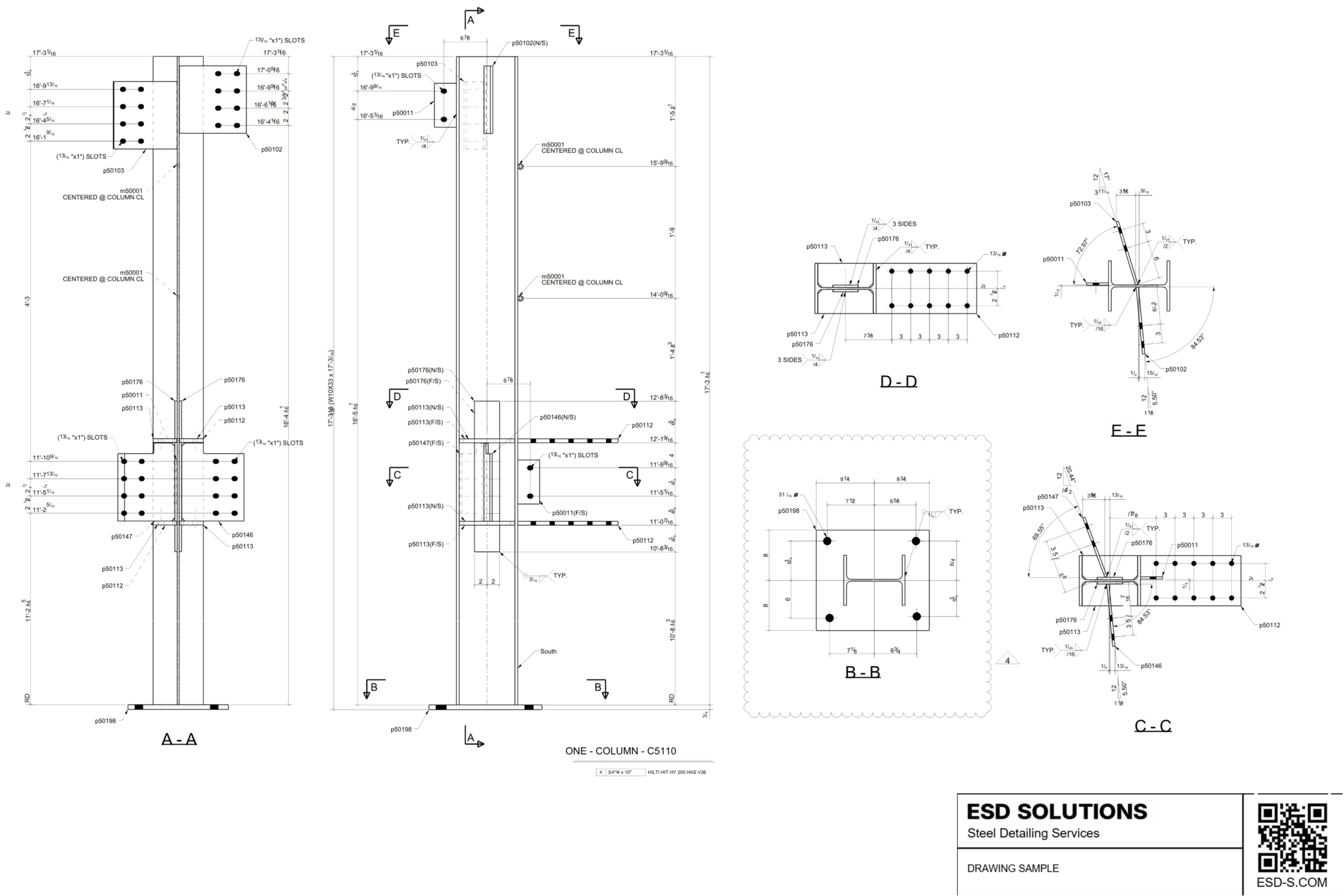
Erection Drawing
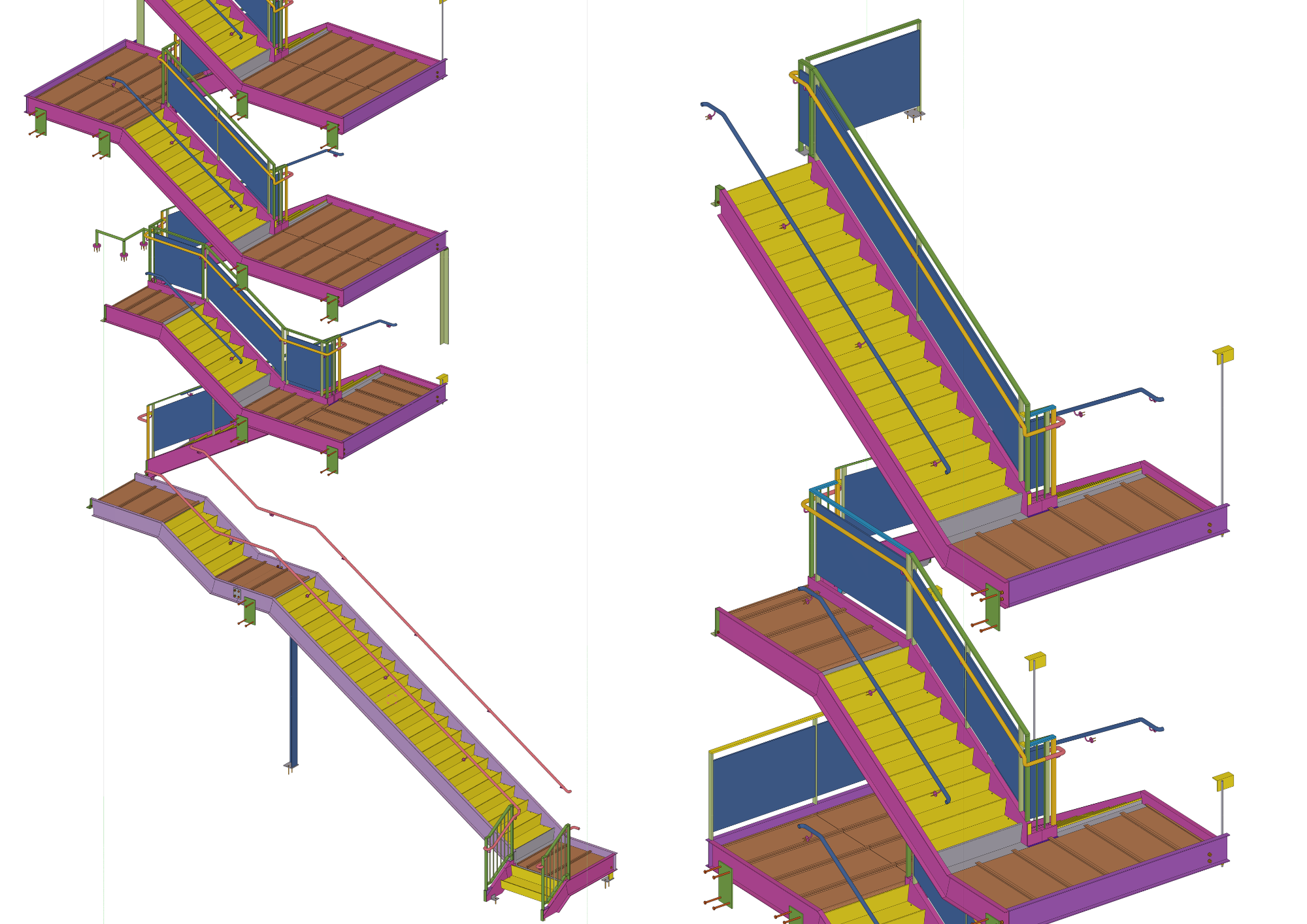
IFC
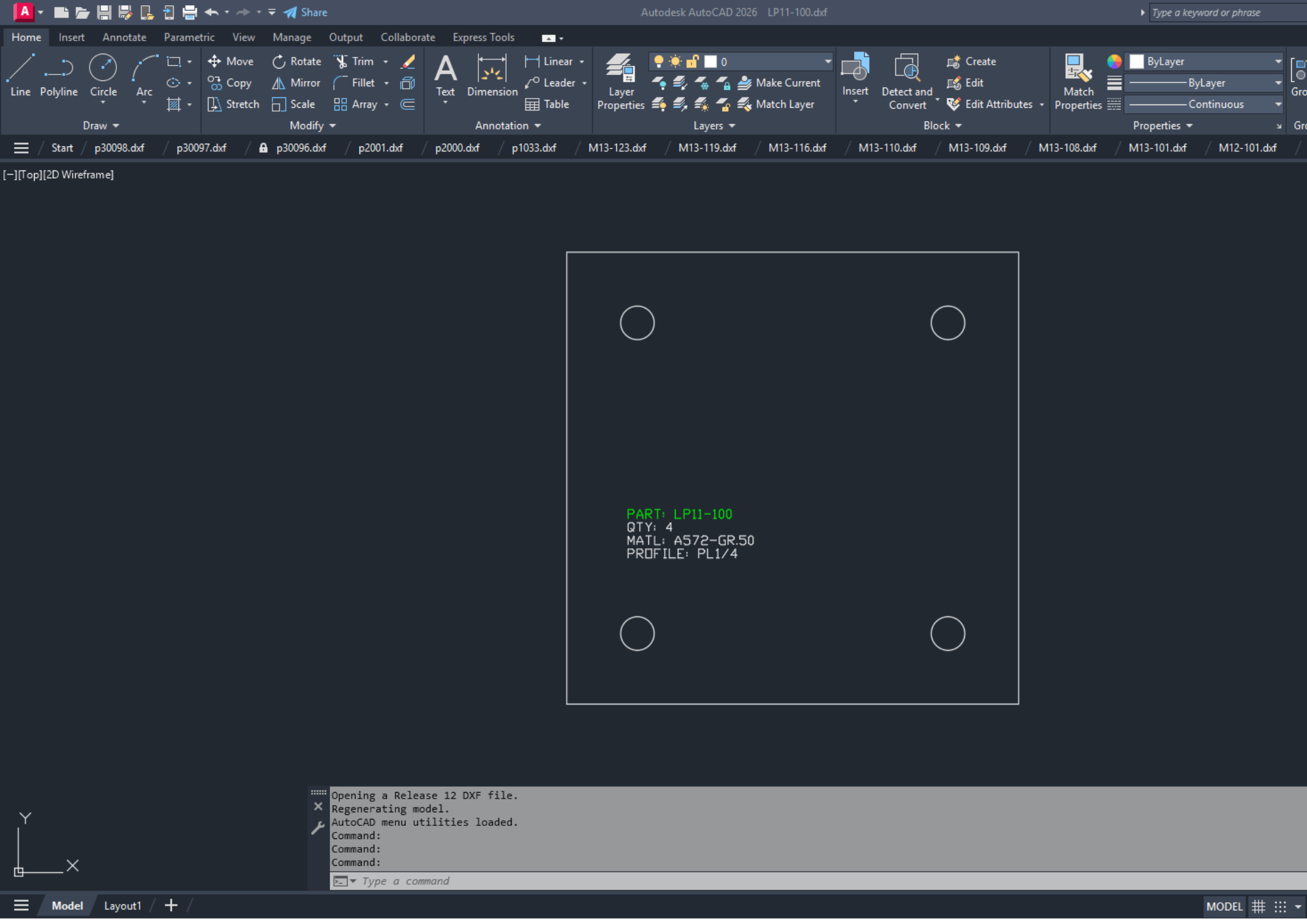
DXF
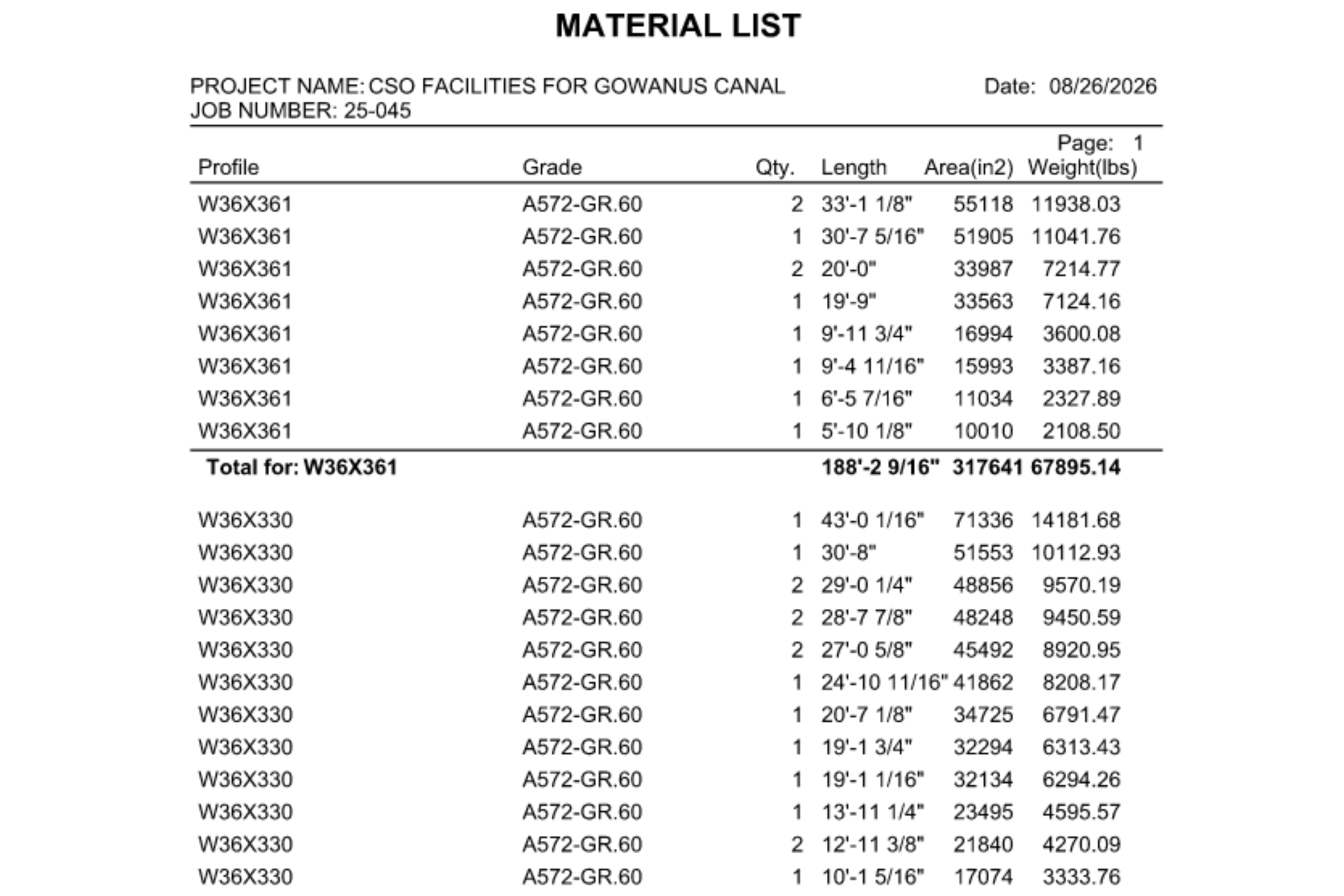
Material List
How We Handle Steel Stair Detailing
Our steel stair detailing process is organized around the full project cycle, from early scope review and RFIs through modeling, checking, submittals, and fabrication releases. Each stage is used to confirm the information needed for the next one.
Kickoff & Scope Alignment
We set up the project environment before modeling begins and confirm scope, standards, thread design, railing requirements and key project parameters upfront.
Modeling & Coordination
We build a detailed 3D stair model and coordinate width, heights, clearances and headrooms, and support conditions with structural steel, concrete, finishes, and openings.
Submittal & Ongoing Support
Once approved, you receive a complete package of shop and erection drawings, NC/DXF files, material lists, and BIM/IFC exports, and we stay available to support the job during fabrication and installation.
01
Design Review & Early RFI
Architectural and structural information is compared for elevations, openings, support conditions, finishes, and stair requirements. Missing or conflicting information that could affect repeated work is raised through an early RFI or project clarification.
QA & Double-Check
Each release and revision goes through two independent checks for geometry, elevations, connections, railing dimentions, code compliance, and drawing consistency.
Our Stair Detailing Projects
Our Stair Detailing Projects
Why Fabricators Trust
Our Detailers
Stair packages need more than a clean-looking model. They need to fit, connect properly, and make sense in the shop. That is why our team pays close attention to layout, stringers, rail alignment, and the details that affect fabrication and fit-up most.
- Double-check QA process
- Engineering background detailers
- Work is completed in-house and never passed to freelancers
- Project data and client standards are documented at setup
- The same dedicated team works on your projects
- Model access can be provided for review and coordination